'Our Family Hobby'

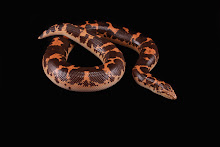
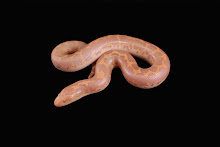
We began collecting Kenyan Sand Boas initially as a way to conquer our fear of snakes. Then we discovered that the whole family enjoyed the care and handling of Kenyans. It has exploded from there. We like this particular breed of snakes because we have a younger family. These East African Sand Boas are smaller, slower than the other breeds of snakes available, easy to care for and relatively new to the US pet trade with new morphs being introduced every year.


CLICK ON ANY PICTURE TO SEE IT FULL SIZE


VISIT OUR WEBSITE AT http://www.sandboamorphs.com/


Wednesday, December 15, 2010

FIRST GRADER DRAWING

A first grade girl handed in the drawing below for her homework assignment . . .
The teacher graded it and the child brought it home.


She returned to school the next day with the following note:

Dear Ms. Davis,

I want to be perfectly clear on my child's homework illustration.
This picture is NOT of me doing a pole dance on a stage in a strip joint surrounded by male customers with money.
I work at Home Depot and had commented to my daughter how much money we made in the recent snowstorm.
This drawing is of me selling a shovel.

Sincerely,
Mrs. Harrington


Monday, December 6, 2010

Love is in the Air!!!!

We have started putting togethers pairs with an expected delivery date of May 1st, 2011...for those of you who have bred sand boas that would be May 1st, + or - 4 weeks!

This is a dodoma male being bred to a high orange female.
Dodoma Male


 This is a male Red Stripe and a High Orange Normal Female with a natural patterned stripe...we think this should be a great litter of super red/orange stripes!


This is a fun breeding project...the male is a Stripe het Anery who I purchased from Scott Miller about a year ago when he weighed about 6 grams...I don't think he missed a meal in a year and I fed him twice a week religiously! I've paired him up with my largest Anery Female....we're hoping for white stripes in the litter around May!


This breeding was a difficult decision. We have a three + year old 75% Rufescen Female who has become a bit of a picky eater as she has gotten older. She use to eat hoppers and an occassional mouse but she has gotten to the point where she wants to eat about 4 live fuzzies and will refuse the larger single meals. So what we have found is that once a female sand boa has a litter they become voracious eating machines. The problem is you have to get them large enough to be able to safely breed them and come out of the whole ordeal relatively healthy. We've decided that we are going to go ahead and breed her to a male Rufescen and expect to have some nice rufescen/stripes in the litter. 


If they look more 'cuddly' than the other breeding pairs, we thought the same thing. For those of you who have never seen a male sand boa work, when introduced to a female the best males will rub their body agains the female and generally get her warmed up. This male was introduced to this female on the photography studio and literally within 15 seconds was on  his game. She didn't seem to mind, either!

Jenn and I sat down over Thanksgiving Weekend and worked out our breeding schedule for the 2011 breeding season. We are breeding for 35 litters to be delivered in 2011 and have about 8 amazing present sub adult females that we hope will be large enough to breed by this time in 2011.

Hope you enjoy, Mark@LHALegal.com

Sunday, December 5, 2010

FOLLOW US ON FACEBOOK

Want to be updated when we've updated the blog? Where our next reptile show is? Send a friend request to www.facebook.com/sandboamorphs and or click on the ling on the top right of this blog and we'll send you notices via facebook!

Kenyan Sand Boa Morphs Standard Images

If I could have any "NORMAL" patterned Kenyan Sand Boa, I'd want a nuclear meltdown or a high orange flame. The normal patterned Kenyan sand boas are also known as the 'wild type' or in another words, this is the pattern you would typically find in the wild, black/brown saddles with a yellow to orange coloring. The Nuclear Meltdown is a cross between a Nuclear Kenyan Sand Boa (line bred by Roy Stockwell of Canada to an almost fire engine red) and a locality snake known as the Dodoma Valley sand boa or simply known as a Dodoma (reduced patterned as to the saddles and a gene that will stop their color from flecking out as they age). Here is two examples of each....sorry, none of these snakes pictured are for sale.
2009 Nucular Meltdown Male

2009 Nucular Meltdown Male 

2009 High Orange Flame Female
The Anerythristic or 'Anery' (sometimes also referred to as an Axantic, both terms are correct because anerythristic and axantic describe lacking in red/orange/yellow pigment which are all colors of normal Kenyans Sand Boas) or 'Black and Whites' are customer favorites, lately, we are seeing a trend to emphasize the extreme black saddle color, the high white color and a reduced patterned saddle (like a dodoma). While there are better examples of high white reduced patterned anery's, some times referred to as dodoma anery's (although this is a confusing name because Dodoma is a locality), we are pretty happy to have this future breeding pair of anery's in our collection.
2009 Female High White Reduced Patterned Anery
Next two below: 2009 Male High White Reduced Pattern Anery


The snow Kenyan sand boas are a simple double recessive trait, lacking the black saddles and the rich colors of a Normal sand boa. The holy grail of the snow sand boa has to be the yellow snows. I purchased 2.2 (two pairs) of snow sand boas last year from a litter of two yellow snow sand boas. These two are coming along nicely but if you notice the females saddles look like they will turn yellow by adulthood, whereas, the male does not look like his saddles will turn yellow. It's a crazy phenomenon where breeding a yellow snow male and a yellow snow female does not guarantee that all the resulting litters saddles will turn yellow.
2009 Female Yellow Snow (next 2 images)


2009 Male Yellow Snow


We love the albinos, especially, the ones with lavendar saddles to contrast their great high orange color. The albino (also referred to as an amelanistic) is a simple recessive trait that lacks the black/brown pigment found in the normal Kenyan sand boa. We are trying to selectively breed our albino's for the lavendar trait but need more females to be successful. If you have an albino female with lavendar colored saddles, please contact Mark@LHALegal.com and let's work a deal, trades, cash, or even children can be sent in exchange.
2010 Male Lavendar Albinos (next three images)


For any questions please email Mark@LHAlegal.com