'Our Family Hobby'

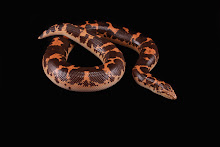
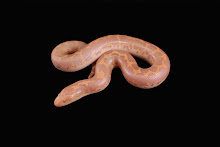
We began collecting Kenyan Sand Boas initially as a way to conquer our fear of snakes. Then we discovered that the whole family enjoyed the care and handling of Kenyans. It has exploded from there. We like this particular breed of snakes because we have a younger family. These East African Sand Boas are smaller, slower than the other breeds of snakes available, easy to care for and relatively new to the US pet trade with new morphs being introduced every year.


CLICK ON ANY PICTURE TO SEE IT FULL SIZE


VISIT OUR WEBSITE AT http://www.sandboamorphs.com/


Monday, January 31, 2011

I JUST BOUGHT A KENYAN SAND BOA (Indian, Rough Scale, Javelin...sand boa)….WHAT NOW!!!!!!

Take a deep breath and relax. Kenyan Sand Boas (KSBs) (Indian Sand Boas, Rough Scale Sand Boas, Javelin Sand Boas, Saharan Sand Boas) are very hardy animals that are very forgiving of your husbandry mistakes. Our first couple of KSBs went a few months without any heat, other than the funny twitches, they have been just fine since that incident a few days ago . Seriously, for a few dollars you can be well on your way to having prepared a wonderfully acceptable KSB habitat in just a few minutes.
What You Need:
1) Housing: Either a sweater box with a locking lid or an aquarium with a wire mesh top

2) Heat: the easiest and quickest way to heat your snake is to pick up a heat pad, thermostat and heat diffuser at your local pet store. Make sure the heat pad is about 1/3 the size of the total cage.

3) Substrate: I know it is a sand boa but they are not found in the wild in loose sand so I would avoid it as your first substrate. The quickest and easiest substrate would be to purchase Aspen Shavings or Sani-Chips but you can always use shredded newspaper or layers of paper towels.

4) Water: You’ll need to put some sort of heavy water dish in your snake house on the opposite end of the heat pad.

Your Kenyan should now be safe and warm, give him a couple days to acclimate with minimal contact.
When you buy your KSB it is always a good idea to ask the person you purchased it from whether they are eating F/Ts (Frozen and Thawed Mice) along with what size of mouse they have been feeding them (Pinky, Fuzzy, Hopper and Mouse). If they are eating FTs then you can purchase a supply of food at any reptile show, online or even at local pet stores. If they are eating only live mice, then you’ll need to find a reliable supplier and depending on your location, this is not always an easy task. Start looking now so your new purchase doesn’t have to go an extra couple of weeks without eating.

Kenyan Sand Boa Care

Indian Sand Boas and Rough Scale Sand Boas require essentially the same care as Kenyans with the exception that Indian Sand Boas grow slightly larger and may require a larger cage as adults


(Gongylophis [Eryx] colubrinus loveridgei)

Native Range: The Kenyan Sand Boa (Eryx colubrinus loveridgei) is found in sandy savannah areas of Kenya and adjacent African countries. Most specimens present in US collections have origins tracing back to imports from Kenya in the late 1970s and early 1980s. These snakes are uniquely adapted to a burrowing way of life, having tiny eyes, valvular nostrils to exclude sand and the lower lip is set back to provide a strong chisel-like nose for burrowing. Strongly tuberculate scales on the posterior provide additional traction for pushing through dense soils. Recently, herpetologist have suggested that these small snakes be placed in a group of related forms including Charina, Lichanura, Eryx, and Calabaria. Needless to say, this is a subject of much debate!

Size: Approximately six to eight inches long at birth, adult females average about two feet in length. Many males are considerable smaller, with sexual maturity being obtained by the males at about one year of age (75 grams) and females at about two years of age (250 grams).

Handling: Kenyan Sand Boas rarely attempt to bite, although they may do so if restrained. Handle gently, without pinching or squeezing, allowing the snake to move through your fingers. Do not allow the snake to dangle unsupported.

Caging: Any ‘typical’ snake cage can be used, with a ten gallon aquarium being adequate for an adult pair adult.

Substrate: A variety of particle substrates can be used to satisfy the needs of this fossorial specie. Sani-Chips, Aspen bedding, sand, and Care Fresh are popular with many keepers. Keep the substrate clean and dry at all times. As with all reptiles, do NOT use cedar or pine shavings. These items are toxic to reptiles.

Food: Most Kenyan Sand Boas will be fed a diet of mice throughout their lives. Hatchlings usually feed readily on newborn ‘pinkie’ mice, and should be fed about every five to seven days. Increase the size of the meal as the snake grows.

Humidity & Water: Provide clean water in a small dish. Humidity should be kept low, or respiratory problems can result. Due to the variance in cages and home environments, some snakes may experience shedding problems, particularly the tail tip. If this is noticed, provide a small plastic container with lid (cut an access hole in the side) filled with damp sphagnum moss or paper towels. This will allow the animal to shed properly. Stuck sheds may harden and constrict the blood flow to the tail, causing loss of the tail tip. Many shedding problems can be rectified if noticed quickly simply by placing the snake in a small deli cup overnight with a wet paper towel. Place the cup partially on the hot spot in the cage.

Heating & Lighting: Provide a thermal gradient by placing a heat pad under one end of the cage. This should allow the snake to choose from higher temperatures (about 90-95F) at the warm end, and cooler temperatures (about 78-83F) at the cooler end. Provide suitable hiding areas at both warm and cool areas, so the snake can feel secure at any temperature. These snakes seem to prefer enjoy burrowing underneath flat hiding places located directly on top of the substrate, rather than more conventional hiding places. Temperatures below 75F should probably be avoided. No special lighting is required for these nocturnal animals. A common mistake is providing a overhead heating source as the primary heat source, the sand boa does much better with belly heat, if you choose to use overhead heat be sure to take your temperature readings from the bottom of the substrate and not the top.

Reproduction: While all Kenyan Sand Boas can be accurately sexed by probing, many can be accurately sexed simply by checking for the presence of tiny 'spurs' on either side of the vent. These 'vestigial legs' are nearly always absent in females. The presence of these spurs, along with the noticeably longer and thinner tail of the males is sure visual method of sexing these snakes. Hatchlings can also be sexed by manually everting the hemipenes (a process known as ‘popping’). Probing or popping should only be performed by an experienced individual, as improper technique may result in severe damage or even death. Most specimens will require a mild cooling period to breed, but some readily reproduce under normal conditions. Like all boas, they are ovoviviparous, producing live young but will readily breed year roung. Typical litters consist of about ten to twenty offspring, although larger litters are recorded.

Thursday, January 20, 2011

Repticon Atlanta Next Weekend January 29th and 30th!!!!

Slow time of the year, very little being born and what we have for sale is individually pictured and is already posted under live and frozen feeders. We will be at the Atlanta Repticon show next weekend. We will have tables with McBrayer Reptiles (specializing in Balls and Geckos you can reach Justin at 440-221-8860 ) and Coldblooded Novelties (Frank Patinella) http://www.coldblooded-novelties.com/ for all of your dry goods, heat tape, thermostats, racks, hides, stainless steel, snake hooks, etc, etc, etc. Come by and see us!!!!

Saturday, January 15, 2011

Incredible Day at the BJCC Dixie Reptile Show

We had a great turnout today at the Dixie Reptile Show's new home at the BJCC Medical Forum Building just a few blocks North of our old UAB site. The grumblings about no parking and concern about being downtown were unwarranted as there was plenty of parking without incident by all. I didn't realize how big the BJCC Campus is with multiple other conventions going on today. Apparently there was a cheerleading or dance competition at the BJCC because we saw a lot of girls in cheerleading/dance outfits with glittery eyes. There was also some sort of Celebrity Look A Like Contest going on, I swear I saw Michael Jackson from the '80s and P. Diddy, not to be confused with the time eras of Puff Daddy or Diddy. And if that wasn't enough NORML had a hall on the BJCC Campus today.

The place is easy to find, just park and ask one of the friendly (no joke) BJCC staffers where the show is and they'll point you on your way. We were blown away by how well everything went. Check out Terry's page http://www.dixiereptileshow.com/ for the directions, dates and times!

Pictures forthcoming!

Friday, January 7, 2011

Albino Paradox Are Here!!!!

It looks like we have 5.4 albino paradoxes!!! Get'em while they are hot. These guys and gals also have lavender saddles! Incredible contrast with black spots....as Scott Miller told me, thus the 'paradox'! Interesting fact I was unaware of until Scott mentioned it the other day. Kenyan Sand Boas are the only known species of snake that have a genetic ability to inherit the recessive trait of paradox. Whereas, with other species like the ball python it is truly random without any predictability. They are $200 a piece. Let me know if you are interested. Mark@LHALegal.com

Or come see them in person at the http://www.dixiereptileshow.com/ on January 15th in Birmingham, Alabama or on January 29th at the Repticon Atlanta Show...assuming any are left!


Thursday, January 6, 2011

2011 Sand Boa Calendar For Sale

My wife, Jennifer, has put together an awesome Sand Boa calendar for 2011. It is mostly Kenyans with some rough scales and sunsets scattered in.

If you'd like to purchase a 2011 Sand Boa calendar you can do so by selecting the following link and following the directions through check out.

Not only does it contain some excellent pictures of cool sand boa morphs but includes most of the dates for reptile shows across the country.

Meet our Adult Herman Tortoises

Adult Herman Tortoises


Sunset Indian Sand Boas

Here are a few images of our Sunset Indian Sand Boas
Female Indian Sunset 2


Female Indian Sunset 3 belly (F2)


Male Sunset Indian 1

Male Sunset Indian 1 belly (F3)

Male Sunset Indian 2


Tuesday, January 4, 2011

First Litter of the Year!

We have been waiting and waiting and waiting on this litter....I really expected her to drop by the first week of December, she must of been gravid 6 months or atleast 5 1/2. The biggest problem I was having was that she stopped eating at least 2 months ago, she did eat a fuzzy tonight.

This is such a cool litter, we have been trying to reproduce the lavendar saddles on our albinos and I now know for sure one of my male snows is the culprit. This female albino is a great snake but she has the normal cream saddles. We had some great albinos this last year that had an awesome lavendar saddle color coupled with some real nice high orange or cream sickle coloring. These guys and gals are less than 12 hours old, they are lavendar for sure and a good number look cream sickle colored! Awesome, we are excited about this litter, 14 in total but one did not make it. The rest look real healthy!

Check them out!

Here's Momma a few weeks ago...


Here's the father....


High Contrast Albinos het Snow born January 4th, 2011


Sunday, January 2, 2011

Snow Paradox bred to a Yellow Snow Kenyan Sand Boa

My first experience with a Snow Paradox Kenyan was just a couple years ago. We were looking to purchase a couple young snow female babies and someone sent me a picture of a female snow with all these black splotches on it. I responded I liked the snake but didn't like the black spots....lol....they responded, 'What do you think a snow paradox is?'...at the time I didn't respond...I didn't know what a snow paradox was!!! Technically, I do not own any paradoxes as of yesterday morning. All of our paradoxes and het paradoxes are either owned by my son, Braxton or in some quasi co-op with his Mother.

Braxton has gone paradox crazy and insistently asks me what will we get if he breeds his male snow paradox (the little guy just hit 75 grams and Braxton has him planned to pair up with just about every female I own!) to X. Which got me thinking...what would you get.... We have a nice young yellow snow female that is about ready to be bred and Braxton was adamant that if we bred his Snow Paradox to the Yellow Snow female we'd get yellow snow paradoxes....I was adamant we wouldn't. To settle arguments like this we typically turn to Scott Miller who either knows everything about Kenyans or convincingly makes it up!!! LOL...just kidding, he knows his Kenyans and hasn't led us wrong yet.

Snow Pardoxes carry a 'snow paradox' gene, not a 'snow only' gene so by breeding them together you get a litter with hets for snow paradox and albino paradox genes from the snow paradox side but you get hets for the snow and albino solo genes from the yellow snow side. We don't know how the 'yellow' part in the yellow snow is for sure passed along but if it is genetic than the litter would have that going for it too. Here's the best part....snow paradoxes  carry the anery gene, thus the paradox so breeding a snow paradox to the yellow snow results in a litter of ANERIES possibly het for snow paradox, albino paradox, snow, albino and possily yellow snow....We've decided we'll pair them up next month and are super excited about the resulting litter! We have yet to negotiate the litter ownership %'s since the yellow snow is mine but claimed by my younger son Asher....but I'm sure we'll have some excess males for sale this summer. Keep an eye out for the birth announcement!!!!!


Snow Paradox


Yellow Snow