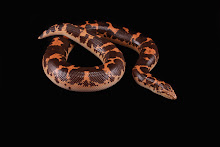
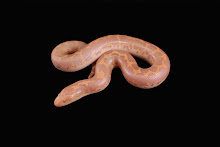
We had a great time in Bowling Green Kentucky at Jarrod Greer's Kentucky Reptile Expo early this year and are happy to be headed back August 6th. For more information you can check out their website http://www.ekreptileshow.com/ .
We will be bringing our top quality, home bred, Kenyan Sand Boas. Come on out and hold the perfect snake for you! Mark@LHALegal.com
Saturday, July 30, 2011
Friday, July 29, 2011
Repticon Baton Rouge, LA
We had a great time vending at Repticon's Baton Rouge, LA show July 22 & 23. Here are some images from the show right before it opened.
There was a big line of visitors waiting for the doors to open.
Here are a few images of Mark & I at our Sand Boa Morphs table!
There was a big line of visitors waiting for the doors to open.
Here are a few images of Mark & I at our Sand Boa Morphs table!
Here are the names of two vendors that were at the show for those of you who are looking for live or frozen mice for your Kenyan Sand Boa in the Baton Rouge area:
1. Bushill Rodents (www.bushhillrodents.com) 225.505.4061 they offer nationwide shipping, delivery or pick-up and are located in Saint Francisville, LA The owner is Colby Nelson who is a native of area.
2. A Pet Salon Pet Planet USA lcated 14115 Hwy 44 Gonzalez, LA 70737 225.644.2636 they also carry other pet supply porducts.
The following are images looking over the vendores at the show.
ZooMed's Eric Russell
We had the pleasure of having Eric Russell from ZooMed come and have dinner with us July 19, 2011. Check out Zoomed's awesome van! ZooMed carries many wonderful pet suppy products in pet stores across the nation. They also display many products at reptile shows.
Labels:
Eric Russell,
Pet supply prodcuts,
ZooMed
| Reactions: |
Tuesday, July 26, 2011
Repticon Baton Rouge we Thank You!
We had a great time in Baton Rouge this weekend. Thank you everyone who stopped by the table and spent time with us this weekend.
FIRST, if you have not sent a facebook friends request to us 'Sand Boa Morphs' then you are missing out on the up to date pictures and info. Due to the ease of uploading cell pictures to fb, I am constantly posting special deals and new litters. Don't miss out, and have the first crack at all of our new offerings. Send a facebook friends request to 'Sand Boa Morphs' today.
SECOND, if you have ever asked me to contact you when such and such became available or thought, I'd sure like such and such a Kenyan Sand Boa, or just want to know when a certain morph or het is born, email me or message me on facebook. We finally are starting to get surplus litters and we're going to start trying to get you those requested snakes. Email Mark@LHALegal.com or send it to 'Sand Boa Morphs' on facebook.
Thanks again for all or your support and patronage!
Mark and Jennifer Huntley
FIRST, if you have not sent a facebook friends request to us 'Sand Boa Morphs' then you are missing out on the up to date pictures and info. Due to the ease of uploading cell pictures to fb, I am constantly posting special deals and new litters. Don't miss out, and have the first crack at all of our new offerings. Send a facebook friends request to 'Sand Boa Morphs' today.
SECOND, if you have ever asked me to contact you when such and such became available or thought, I'd sure like such and such a Kenyan Sand Boa, or just want to know when a certain morph or het is born, email me or message me on facebook. We finally are starting to get surplus litters and we're going to start trying to get you those requested snakes. Email Mark@LHALegal.com or send it to 'Sand Boa Morphs' on facebook.
Thanks again for all or your support and patronage!
Mark and Jennifer Huntley
Wednesday, July 20, 2011
Repticon Baton Rouge July 23rd and 24th
We will be vending at the Baton Rouge Repticon.com reptile show this weekend July 23rd and 24th. We will be bringing over 70 different Kenyan Sand Boas to the show. If there is something specific you are looking for, please email Mark@LHALegal.com so I can make sure we have it for you. You can also follow us on Facebook, send a friends request to Sand Boa Morphs!
Tuesday, July 19, 2011
Dixie Reptile Show
Here are some images from our home show this past Saturday July 16, 2011: www.dixiereptileshow.com.
Here we are: Mark and Jennifer Huntley with http://www.sandboamorphs.com/
Mr. Bo Lett and his son Charles selling live mice.
Mr. Joe and his wife and his rats
Here is Mr. Terry Heuring that puts on the Dixie Reptile Show.
Rusty Balls.....
Whitney and her hot sister!
Michael and Brandi McDonald of Strictly Xotics...also are the promoters of the Culman, Alabama show in OctoberAngie Pridemore with a variety of snakes and Jennifer Blackburn
Frank Patinella of Coldblooded Novelties with his racks, hides, heat tape, and his custom Vivarium thermostats. Along with a variety of snake species, including pines, ball pythons and some hard to find snakes.
Boy Wonder Justin McBrayer of McBrayer Reptiles....breeder of the finest Ball Pythons and many other snake species.

Darrin, Nicki and the beautiful Violet! Breeder of only the finest boas.
Friday, July 15, 2011
check us out on facebook
If you want up to date info and pictures then send a friends request to sand boa morphs.
Published with Blogger-droid v1.7.2
| Reactions: |
Thursday, July 14, 2011
Available Page Updated
I've just put a list of some of the sand boas we presently have for sale in the available section. We overnight via UPS multiple times a week for a flat rate of $30 anwhere in the continental US. As alwasy, if you are looking for anything in particular you can reach Mark@LHALegal.com or on facebook under Sand Boa Morphs.
Monday, July 11, 2011
Sand Boa Display Tank Contest
Post a picture of your sand boas best tank setup on facebook or email it to Mark@LHALegal.com and we'll post it on our wall. The best looking sand boa tank setup will win a free Sand Boa Morphs T-Shirt!
Feeding a Stubborn Sand Boa
If your snake does not eat just about everytime you should consider 'cupping' them.
Cupping a snake for feeding makes the snake feel safe and secure while putting it in very close proximity to food. Simply place the appropriate sized live or frozen mouse in a cup and place the snake in the cup. Be sure your cup has holes so your snake can breath. I have pictured a few of the cups we use to cup or snakes. I try and use the smallest cup I can for each snake so we keep a variety of options on hand.
Containers you could use
Some tips:
1) Cup your snake right before you go to bed. Sand Boas are nocturnal and eat more readily at night.
2) Put the cup on the hot spot of the cage.
3) Don't move the cup until the next morning. Your snake will be fine overnight, regardless if it has eaten or not.
Good Luck
Mark@LHALegal.com
Cupping a snake for feeding makes the snake feel safe and secure while putting it in very close proximity to food. Simply place the appropriate sized live or frozen mouse in a cup and place the snake in the cup. Be sure your cup has holes so your snake can breath. I have pictured a few of the cups we use to cup or snakes. I try and use the smallest cup I can for each snake so we keep a variety of options on hand.
Containers you could use
Some tips:
1) Cup your snake right before you go to bed. Sand Boas are nocturnal and eat more readily at night.
2) Put the cup on the hot spot of the cage.
3) Don't move the cup until the next morning. Your snake will be fine overnight, regardless if it has eaten or not.
Good Luck
Mark@LHALegal.com
Labels:
Buy,
eat,
eater,
eating frozen/thawed and live pinkies,
feeding,
frozen,
Frozen/Thawed Pinkies,
fuzzy,
Kenyan Sand Boa,
not eating,
Sand Boa
| Reactions: |
Wednesday, July 6, 2011
My opinions of the recessive patterns, wide stripes and paints….
I’ve been asked a bunch of questions over the past couple months about the new morphs we are seeing with recessive patterns, wide stripes and the paints. Here’s what we've gathered and experienced in regards to these morphs….
The recessive patterned anery’s that are starting to crop up all over the internet are looking like some may carry simple recessive genes for reduced pattern. I have seen adult male anery’s that you wouldn’t take a second glance at throwing reduced patterned anery babies that you would give a left hand for. From speaking with a core group of hardcore Kenyan Sand Boa breeders it is generally accepted that the reduced pattern in ‘some’ of the Kenyans is recessive. Some breeders have quasi-proven it out. The problem we run into with reduced patterned Kenyans is that it can also be done by line breeding, meaning you take two reduced patterned anery’s and breed them together and you will get some reduced patterned anerys. Is it genetic? No, do each of those anery’s possibly carry a reduced patterned gene that may not be compatible with each other, yes. What do you do? Find another anery from the same breeder that exhibits reduced patterns….you could start producing super reduced patterned anerys. Obviously, the reduced patterned gene(s) will be reproducible with all the other morphs, like snows and albinos. We are working hard to produce some super reduced patterned snows along with trying to isolate different reduced patterned genes in our sand boas. What does this mean to you? It means we should be able to create even more reduced patterned Kenyans. The most important thing to remember is that when you buy a super reduced patterned Kenyan you may want to get a pair or trio, even if some of the other ones in the litter are not as reduced. If it is a recessive gene, and the fact that some of the Kenyans are so reduced and others are not does tend to give credence to the belief that is a simple recessive trait, therefore by breeding your newly found reduced patterned Kenyan to its siblings you should produce more reduced patterned Kenyans.
The wide stripe project we are working on and the new paints we are seeing are really exciting. They aren’t a total surprise as we’ve known that the Kenyans reduced patterns and stripes have been genetic for a while. In fact, we wouldn't be surprised if there are a bunch of hets out there for these new morphs, more about that later. Once the proven ones start getting out to the public and get breeding to females exhibiting identifiable pattern markers, I feel like we’re going to discover that it isn’t as rare as we thought. The wide stripe project started for Sand Boa Morphs about a year ago when we purchased the HK collection. This was a collection of Kenyan Sand Boas that had been dutifully collected, loved and cared for that included about 20 Kenyans ranging from babies to adults. In the collection was one male wide stripe, two adult female wide stripes and two baby females exhibiting the wide stripe on their top 1/3rd of their pattern with a more naturally and less defined stripe the last 2/3rds. We were aware of the paint project and had seen the original male so we knew instantly that the male and two females in the collection were similar if not almost identical to the father of the paint project. Luckily, we were able to ascertain the origins of wide stripes we had received from HK. We contacted the breeder and last month purchased his entire collection which was quite substantial and included in excess of 30 breeder females, plus subs, babies and males. To our delight, we found more wide stripe adult females in the new collection along with sub adult and babies exhibiting the wide stripe. Again, some of the females exhibited the wide stripe defined pattern in their top 1/3rd to top ½ and then the pattern turns to a more traditional natural looking stripe. The most exciting purchase was the adult male who fathered our wide stripe male. He is a super reduced patterned high orange normal who exhibits none of the defined or even naturally occurring striping we have seen in the rest of the project. We believe we are able to see identifiable pattern markers in partial wide stripes, the known hets and using these markers we have further identified additional possible hets from the new collection. These same markers are also identifiable in the pictures of the paints we have seen along with quite a few random KSB pictures we have seen over the years. In fact, one of our adult females that has been in our collection for years is eaten up with these markers and we should prove out this theory by fall. Are wide stripes and paints compatible genetically? We don’t know and frankly, we don't think it matters. We have multiple females with very similiar patterns we've seen with the paints. As our litters start dropping from this project we anticipate to be selling not only hets but visual wide stripes in the next couple months after the non-visual hets prove this project out by producing visual wide stripes.
The recessive patterned anery’s that are starting to crop up all over the internet are looking like some may carry simple recessive genes for reduced pattern. I have seen adult male anery’s that you wouldn’t take a second glance at throwing reduced patterned anery babies that you would give a left hand for. From speaking with a core group of hardcore Kenyan Sand Boa breeders it is generally accepted that the reduced pattern in ‘some’ of the Kenyans is recessive. Some breeders have quasi-proven it out. The problem we run into with reduced patterned Kenyans is that it can also be done by line breeding, meaning you take two reduced patterned anery’s and breed them together and you will get some reduced patterned anerys. Is it genetic? No, do each of those anery’s possibly carry a reduced patterned gene that may not be compatible with each other, yes. What do you do? Find another anery from the same breeder that exhibits reduced patterns….you could start producing super reduced patterned anerys. Obviously, the reduced patterned gene(s) will be reproducible with all the other morphs, like snows and albinos. We are working hard to produce some super reduced patterned snows along with trying to isolate different reduced patterned genes in our sand boas. What does this mean to you? It means we should be able to create even more reduced patterned Kenyans. The most important thing to remember is that when you buy a super reduced patterned Kenyan you may want to get a pair or trio, even if some of the other ones in the litter are not as reduced. If it is a recessive gene, and the fact that some of the Kenyans are so reduced and others are not does tend to give credence to the belief that is a simple recessive trait, therefore by breeding your newly found reduced patterned Kenyan to its siblings you should produce more reduced patterned Kenyans.
The wide stripe project we are working on and the new paints we are seeing are really exciting. They aren’t a total surprise as we’ve known that the Kenyans reduced patterns and stripes have been genetic for a while. In fact, we wouldn't be surprised if there are a bunch of hets out there for these new morphs, more about that later. Once the proven ones start getting out to the public and get breeding to females exhibiting identifiable pattern markers, I feel like we’re going to discover that it isn’t as rare as we thought. The wide stripe project started for Sand Boa Morphs about a year ago when we purchased the HK collection. This was a collection of Kenyan Sand Boas that had been dutifully collected, loved and cared for that included about 20 Kenyans ranging from babies to adults. In the collection was one male wide stripe, two adult female wide stripes and two baby females exhibiting the wide stripe on their top 1/3rd of their pattern with a more naturally and less defined stripe the last 2/3rds. We were aware of the paint project and had seen the original male so we knew instantly that the male and two females in the collection were similar if not almost identical to the father of the paint project. Luckily, we were able to ascertain the origins of wide stripes we had received from HK. We contacted the breeder and last month purchased his entire collection which was quite substantial and included in excess of 30 breeder females, plus subs, babies and males. To our delight, we found more wide stripe adult females in the new collection along with sub adult and babies exhibiting the wide stripe. Again, some of the females exhibited the wide stripe defined pattern in their top 1/3rd to top ½ and then the pattern turns to a more traditional natural looking stripe. The most exciting purchase was the adult male who fathered our wide stripe male. He is a super reduced patterned high orange normal who exhibits none of the defined or even naturally occurring striping we have seen in the rest of the project. We believe we are able to see identifiable pattern markers in partial wide stripes, the known hets and using these markers we have further identified additional possible hets from the new collection. These same markers are also identifiable in the pictures of the paints we have seen along with quite a few random KSB pictures we have seen over the years. In fact, one of our adult females that has been in our collection for years is eaten up with these markers and we should prove out this theory by fall. Are wide stripes and paints compatible genetically? We don’t know and frankly, we don't think it matters. We have multiple females with very similiar patterns we've seen with the paints. As our litters start dropping from this project we anticipate to be selling not only hets but visual wide stripes in the next couple months after the non-visual hets prove this project out by producing visual wide stripes.
Sunday, July 3, 2011
A couple happy torts in their new enclosure
Above: Sub-Adult Female Greek Tortoise
Above: Young Red Foot Tortoise
Above: Adult Male Hermann Tortoise
We finished a 24 x 24 enclosure a couple weeks ago and these are some of the pictures of them out and enjoying the natural sun and fresh air.
See everyone in Atlanta next weekend!
Mark@LHALegal.com
Subscribe to:
Posts (Atom)